


Insights From the Experts: Archive Is the New Strategic Business Foundation

For years, the archive has been a necessary system for compliance teams. It was a place to retain records and satisfy regulatory requirements. That role is now being redefined.
In Shield’s recent webinar on reimagining archiving (see highlights below), Forrester Principal Analyst Cheryl McKinnon, Shield eDiscovery Expert Aaron Gardner, and I revealed that one pattern is becoming clear: The archive is moving toward the center of business workflows.
This shift is not driven by technology alone. It reflects a deeper realization about how organizations operate, how they manage risk, and how they extract value from their data.
A Familiar System Under New Pressure
Archiving is one of the most established components of the compliance stack. As McKinnon explained, archiving “is a mature market, and has been a requirement for many years.” Yet maturity does not guarantee fitness for purpose. The environment around the archive has changed faster than the archive itself.
Communication formats, channels and patterns have evolved. For example, since every archive started as an EML archiving solution, many solutions are still converting all other communication formats into EML. Consequently, the data loses its integrity.
“The past few years in the archiving market have been among the most innovative that we’ve seen in a very long time.”
Cheryl McKinnon, Forrester Principal Analyst
In addition, data volumes have increased, and regulatory expectations have tightened. AI has reshaped how organizations engage with information, increasing expectations for speed and insight.
McKinnon described the moment clearly: “The past few years in the archiving market have been among the most innovative that we’ve seen in a very long time.”
That innovation is revealing the limitations of legacy approaches.
The Operational Reality: Fragmented Systems, Manual Effort
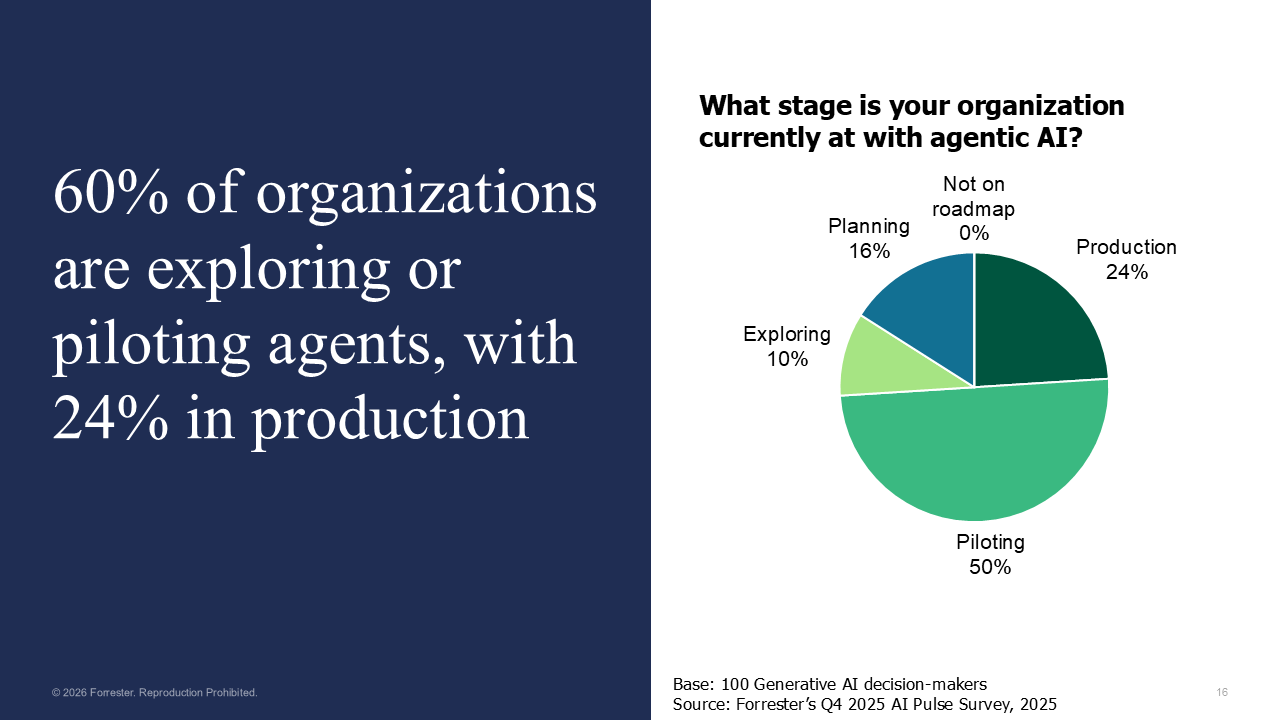
Most archiving solutions in large institutions were not designed as unified systems. They are typically at least 15 years old, have struggled to evolve over time, and were shaped by specific requirements, new channels, and shifting regulations.
The result is often fragmentation. This means that conversation data can span across different systems, processes might be layered on top to bridge gaps, and there might be manual workarounds to complete workflows that the technology cannot fully support.
“People are often working with archives that were originally installed without a lot of thought put into what we would need 10 years from now.”
Aaron Gardner, Shield eDiscovery Expert
Aaron Gardner described what this looks like in practice: “In the day-to-day life of someone in the trenches responding to delivery requests, they’re often working with archives that were originally installed without a lot of thought put into what we would need 10 years from now.”
This becomes particularly apparent in moments that matter most, such as regulatory responses, internal investigations, and litigation support. These are high-pressure scenarios where completeness, accuracy, and speed are critical. Fragmentation makes all three harder to achieve.
Modernization as an Opportunity to Rethink Workflows
Modernizing the archive is often framed as a technical project, or a replacement of legacy infrastructure. That framing, however, is too narrow.
Modernizing the archive is an opportunity to rethink how the organization works around its data. As I pointed out in the webinar, modernizing requires navigating three simultaneous shifts: exploding data volumes, the move to cloud, and the rise of AI. Data continues to grow across channels, the cloud brings the scale to handle it, and AI provides the value of extreme efficiency.
“Think about moving to a modern archive, not only as a technological transformation, but also an opportunity to redefine your business workflows,” I noted during the discussion.
“Modernizing the archive is an opportunity to rethink how the organization works around its data.”
Ofir Shabtai, Shield CTO & Co-Founder
Legacy archives shaped workflows through their limitations. Processes were built to compensate for what technology could not do. Over time, those processes became embedded.
A modern archive changes that constraint. It creates the conditions to simplify workflows, reduce manual effort, and align processes with how teams need to operate today.
The Archive as an AI-Ready Data Foundation
This is where the role of the archive fundamentally changes. We must start looking at the archive as the data foundation for the organization, rather than long-term storage of records.
A data foundation has different requirements. It must be complete, consistent, and accessible across use cases. It must preserve context, not flatten it. This becomes increasingly important as communication expands beyond email and chat. It must support both operational workflows and analytical needs.
“AI has given fresh life and fresh opportunity to this market, and has provided organizations with new ways of working with the information that they’re capturing and preserving.”
Cheryl McKinnon, Forrester Principal Analyst
Moreover, AI is often presented as the starting point of transformation. In practice, it is an amplifier; however, its effectiveness depends on the quality, completeness, and structure of the underlying data.
As McKinnon said, “AI has given fresh life and fresh opportunity to this market, and has provided organizations with new ways of working with the information that they’re capturing and preserving.”
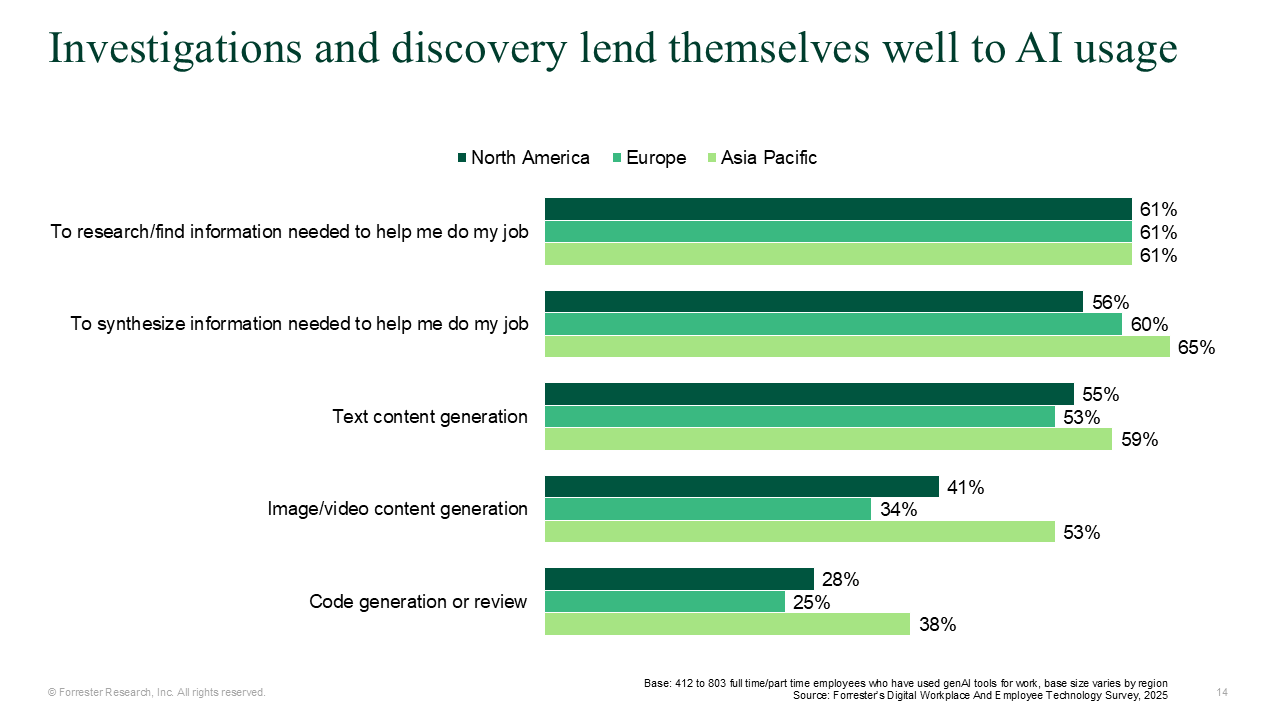
That transformation is already visible in the introduction of AI agents into compliance workflows. For example, Shield has recently introduced Shiela, an AI assistant for investigating archived communications. As I explained in the webinar, “You can just ask your question in free text and the system will identify the relevant communication.”
Building complex search queries is a time-consuming technical skill that requires ongoing training and expertise, making consistency and quality hard to maintain. Shiela removes that friction, simplifying the process while preserving accuracy and control.
It also raises the bar for the archive that underpins it all. Agents rely on data that is consistent and complete. Without that, automation introduces risk rather than reducing it.
Trust Remains the Constant
While technology evolves, the core requirement of trust in compliance does not change. That trust must be earned and reinforced, both through provable data completeness and trusted partnerships with your archive vendor.
“From a regulatory perspective, you’ve got to be able to be sure that you got the data you were supposed to get,” Gardner said.
Defensibility depends on being able to prove completeness, accuracy, and proper handling of data across its lifecycle.
Ofir Shabtai, Shield CTO & Co-Founder
Modernizing the archive is a multi-year journey. It involves data migration, process redesign, governance decisions, and the adoption of new technologies. It also involves uncertainty, because we don’t know what the future will bring.
This is why success also depends on a trusted partnership. Organizations need a partner who can navigate complexity with them: Someone who understands both the technical challenges and the operational realities, and who can adapt as requirements evolve.
The Path Forward
The archive’s role is expanding, its importance is increasing, and its design determines what the organization can do next. The focus has shifted to how we can trust the archive, how we can use it, and how we can act on it.
“The focus has shifted to how we can trust the archive, how we can use it, and how we can act on it.”
Ofir Shabtai, Shield CTO & Co-Founder
Those that do not will continue to struggle with the limitations of systems built for a different era, while organizations that treat the archive as a data foundation will move faster, respond with greater confidence, and extract more value from the information they already have.
Want to hear how leading institutions are approaching this shift? Watch the full webinar to explore the operational, technical, and strategic realities behind modern archiving.
Related Articles
6 Lessons From XLoD: Rethinking Surveillance for the AI Era

Lexicons, LLMs and AI Agents in Communications Surveillance: A practical guide to designing, testing, governing and modernizing communications surveillance using lexicons, LLMs and agentic AI

Subscribe to our newsletter
Gain access to exclusive insights, industry influencers, and thought leaders in
Digital Communications Governance and Archiving (DCGA).