Frequently Asked Questions
Product Information
What is Shield and what does it do?
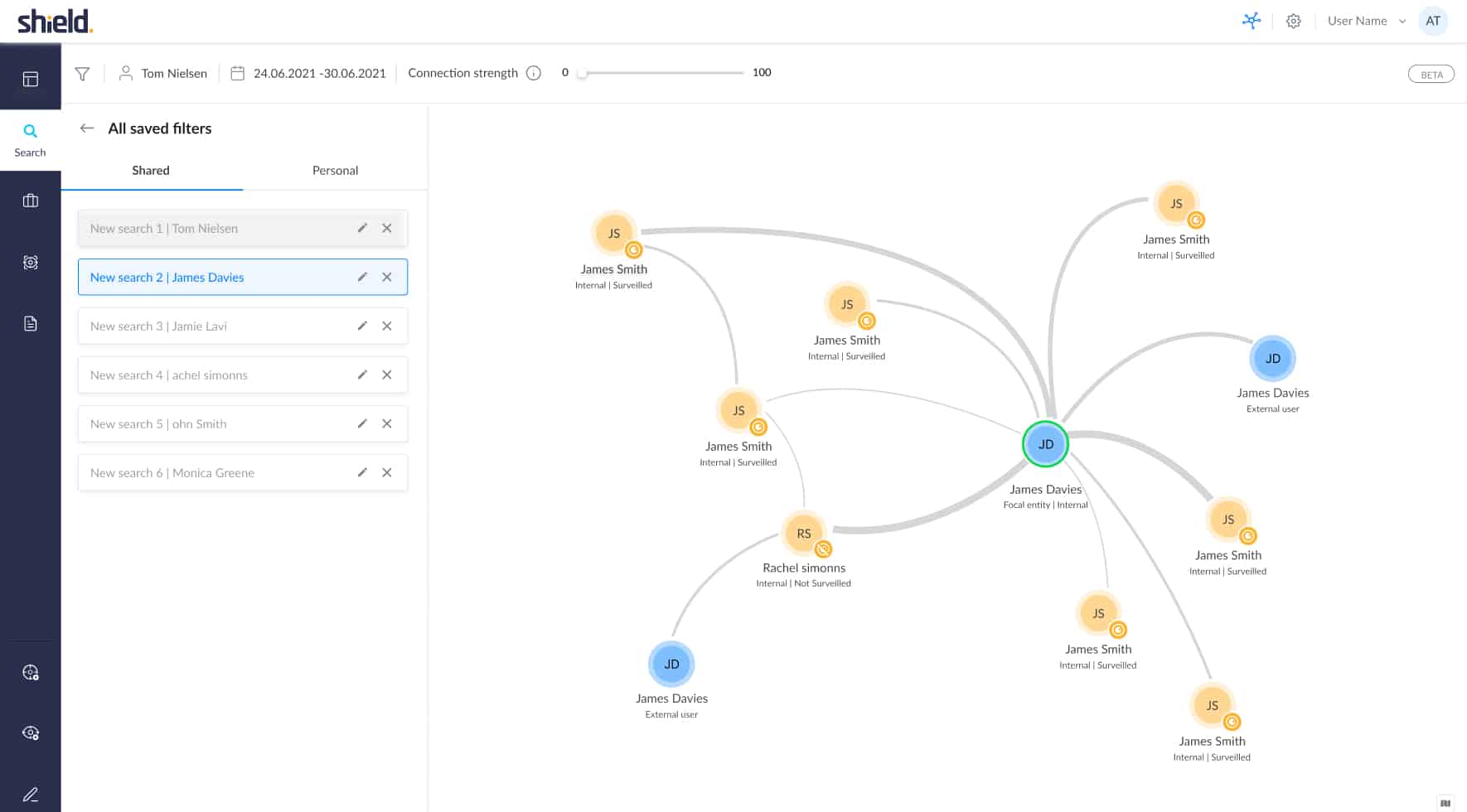
Shield is an end-to-end communication compliance and surveillance platform designed for financial institutions and other highly regulated industries. It captures, monitors, and analyzes communications across 100+ data sources, helping organizations meet regulatory requirements, mitigate risks, and streamline compliance operations. Shield's platform includes AI-driven surveillance, eDiscovery, supervision, and info barriers, all within a unified, secure environment. Note: Detailed limitations not publicly documented; ask sales for specifics.
What products and modules does Shield offer?
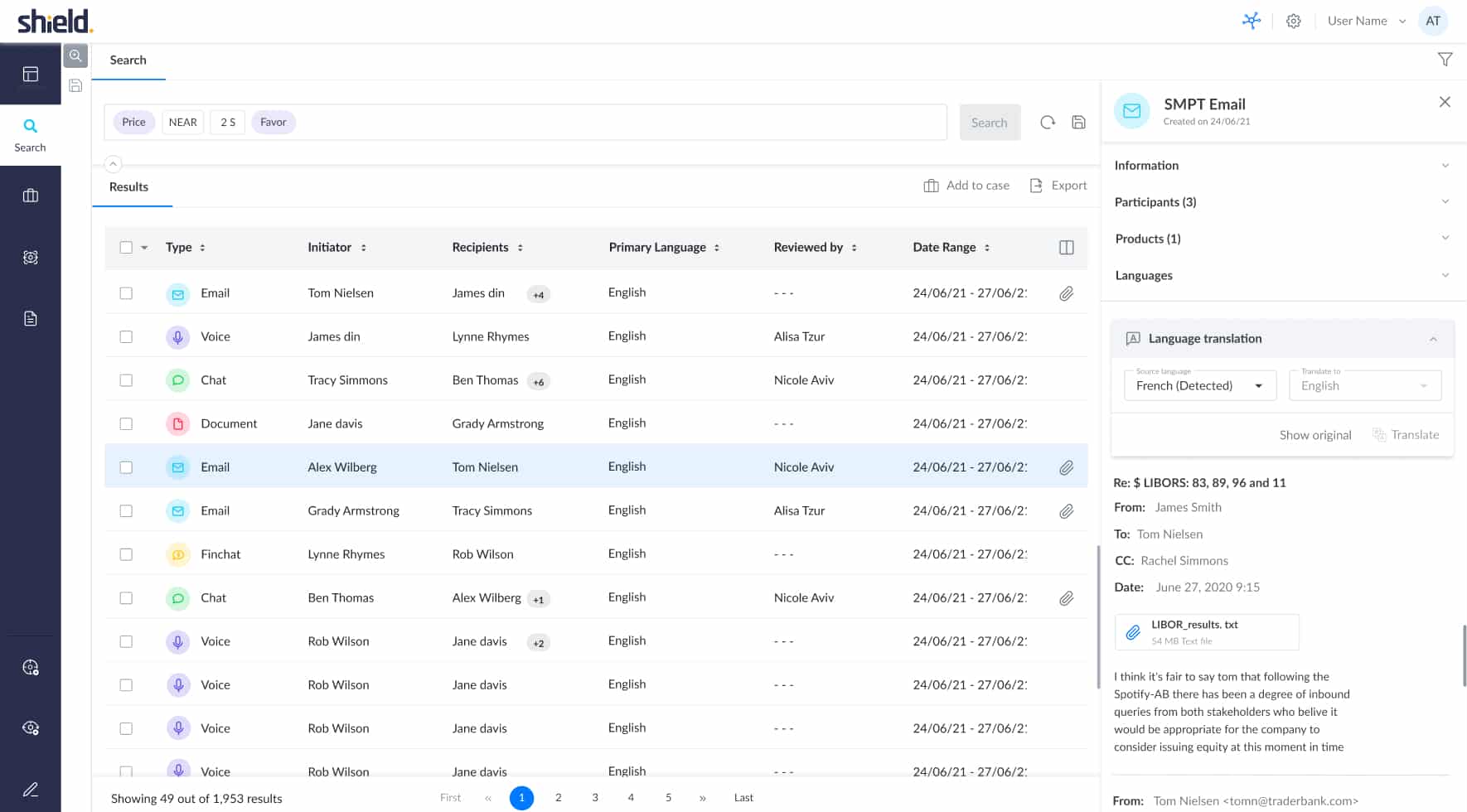
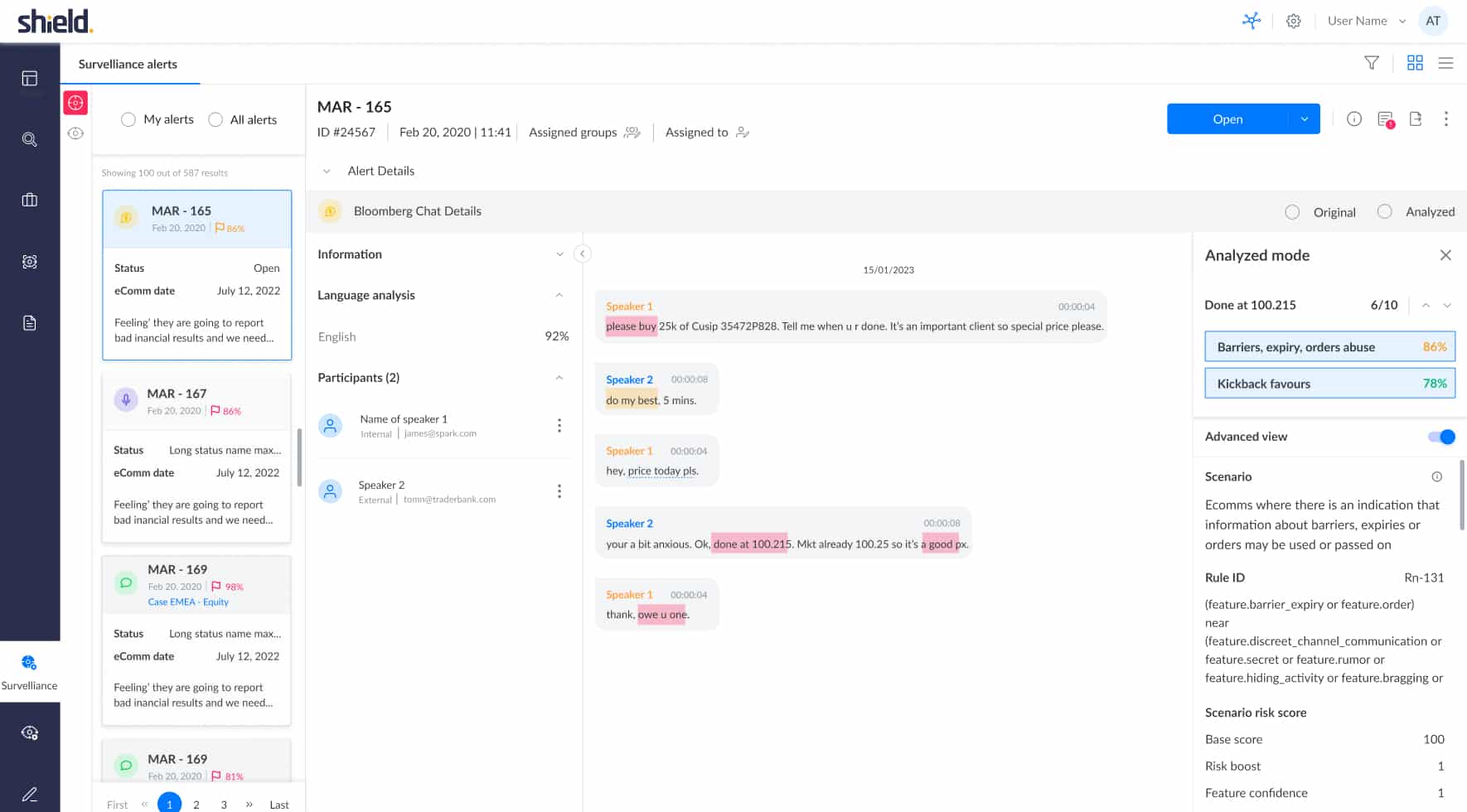
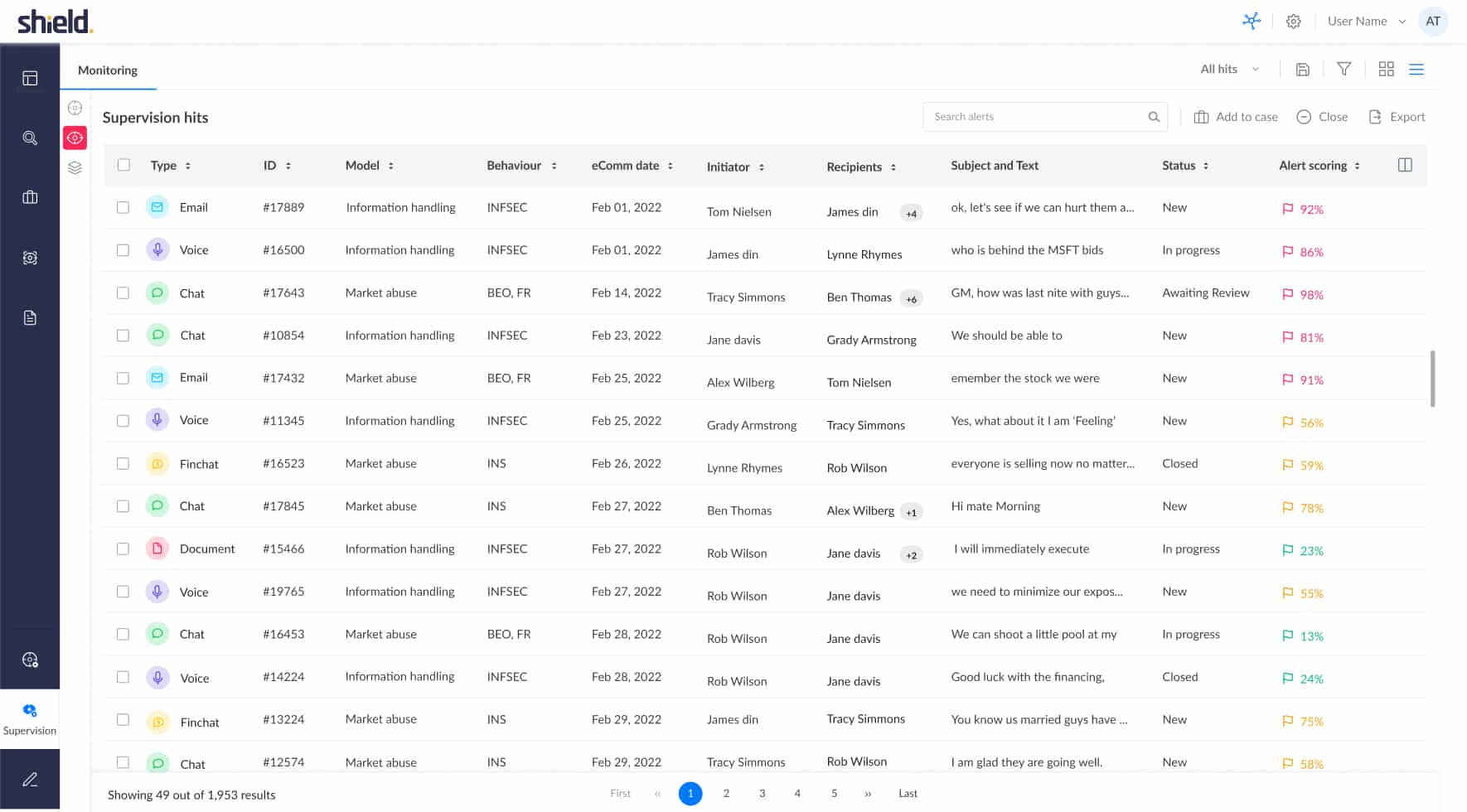
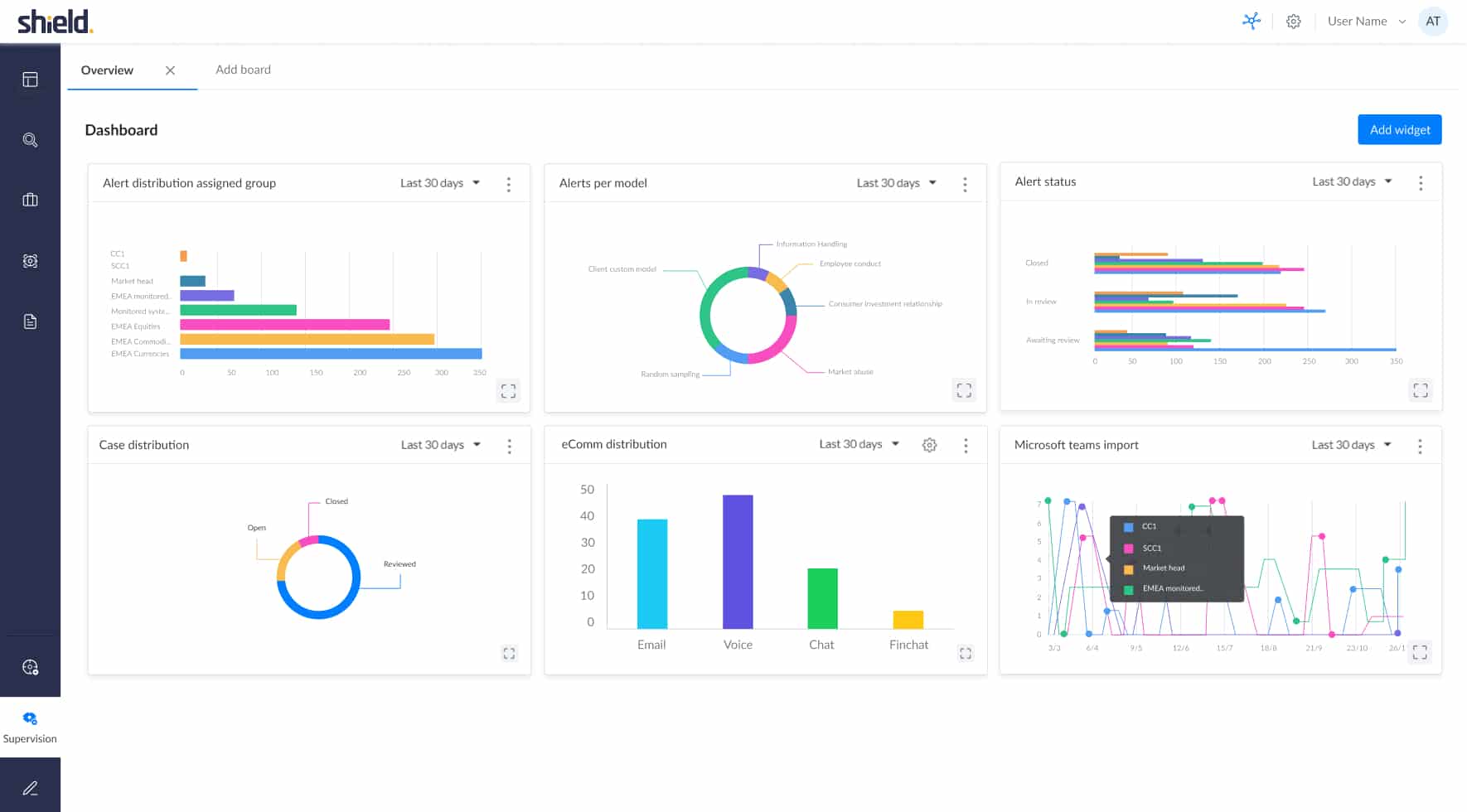
Shield offers several core modules: Shield.Data Hub (centralized communication data archive), Shield.Discover (eDiscovery for rapid data collection and review), Shield.Surveillance (AI-driven communications compliance), Shield.Supervision (tools for identifying and escalating malicious activity), and Shield.InfoBarriers (linking restricted lists with communication data to reduce MNPI breaches). Each module is designed to address specific compliance and risk management needs. Note: Module availability may depend on your deployment; contact sales for details.
Features & Capabilities
What are the key features and capabilities of Shield?
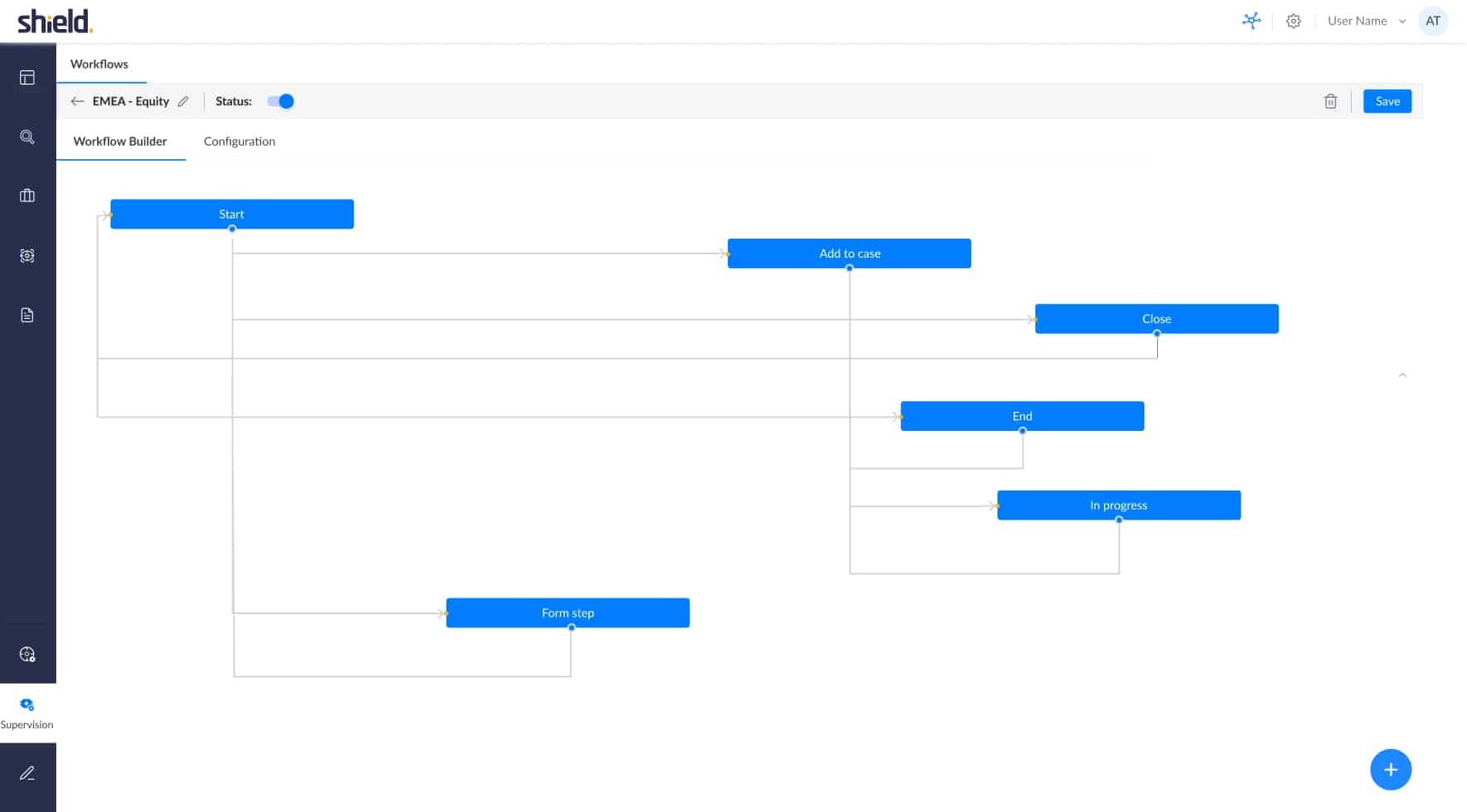
Shield provides advanced AI-driven surveillance (97% reduction in false positives), supports over 100 data sources, offers native language surveillance for 14 languages and on-demand translation for 99+, automates supervision workflows, and includes a rapid eDiscovery platform. It also features voice communication analysis, centralized data management, and compliance with global retention requirements. Note: Some features may require specific modules or integrations; check with Shield for compatibility.
What integrations and connectors does Shield support?
Shield integrates with major collaboration platforms (Microsoft Teams, Zoom, WhatsApp Business, Symphony, WeChat), email platforms (Microsoft Exchange, Office 365, Gmail), mobile (SMS/MMS), financial communication platforms (Bloomberg IB/Mail, ICE Chat, FX Connect), and voice/turret communications. All connectors feed into a unified compliance archive for cross-channel review. For a full list, visit Shield's Connectors Page. Note: Integration availability may vary by deployment.
Does Shield offer an API for data access and integration?
Yes, Shield provides the Shield API Hub, an enterprise-grade API suite that allows organizations to extract compliance data (alerts, violations, audit logs, metadata) and integrate with BI, analytics, and case management systems. It features JWT authentication and a two-layer security architecture. For more, see Shield's API Hub overview. Note: API access may require additional configuration or licensing.
What technical documentation and support resources are available?
Shield offers a comprehensive knowledge base at the Shield Support portal, including technical documentation, FAQs, and troubleshooting guides. Customers also receive tailored training and a dedicated Customer Success Manager during onboarding. Note: Some resources may require customer login or active subscription.
Security & Compliance
What security and compliance certifications does Shield have?
Shield is SOC 2 Type II and ISO 27001 certified, GDPR-aligned, and DORA-compliant. The platform uses zero trust architecture, end-to-end encryption, and segregated multi-tenant environments. Shield undergoes annual SOC 2 audits and independent penetration testing. For more, visit Shield's Security Page. Note: Certification scope may vary by deployment; request documentation for your environment.
How does Shield ensure data security and privacy?
Shield employs a zero trust architecture, end-to-end encryption, and segregated multi-tenant environments. Customer data remains in the customer's environment, with no transfer to third-party locations. The platform is validated by annual SOC 2 Type II audits and independent penetration testing. Note: Detailed technical controls may vary; contact Shield for a security whitepaper.
Pricing & Plans
How is Shield's pricing determined?
Shield's pricing is tailored to each customer based on the volume of communications, number and type of connectors, and the variety of channels monitored. The model is designed for predictability, with no export or exit fees. For a custom quote, contact Shield's team. Note: Exact pricing is not published and may vary by organization size and requirements.
Implementation & Support
How long does it take to implement Shield and how easy is it to start?
Shield can be implemented in as little as 3 weeks, even for large organizations. The platform offers out-of-the-box connectors, pre-built models, and a security-by-design architecture. Customers receive a dedicated Customer Success Manager and tailored training. Note: Implementation time may vary based on complexity and integration requirements.
What support and training does Shield provide to new customers?
Each customer is assigned a dedicated Customer Success Manager for onboarding and ongoing support. Shield provides tailored training sessions and access to a detailed knowledge base with technical documentation, FAQs, and troubleshooting resources. Note: Some support resources may require an active subscription.
Use Cases & Benefits
What business impact can customers expect from using Shield?
Customers can expect enhanced regulatory compliance (e.g., Dodd-Frank, MiFID II), operational efficiency (97% reduction in false positives), improved risk mitigation, cost savings, faster investigations, and centralized data visibility. For example, a Tier 1 Financial Group managed 5.5 million daily communications with Shield, and a US Energy Trading Company achieved a 0.15% alert rate. Note: Results may vary by organization and deployment.
Who are Shield's typical customers and what industries do they represent?
Shield serves Tier 1 financial groups, Tier 2 investment banks, global financial firms, and energy trading companies. Notable customers include UBS, Credit Agricole, and FIS. Industries represented include financial services, energy trading, and investment banking. Note: Shield is best suited for highly regulated sectors; organizations outside these may require a different solution.
What roles and personas benefit most from Shield?
Shield is designed for compliance teams (reducing false positives, improving risk detection), IT teams (rapid deployment, minimal maintenance), legal teams (efficient investigations), supervisory managers (proactive supervision), and Chief Compliance Officers/Heads of Surveillance (centralized visibility and control). Note: Smaller organizations with less complex compliance needs may not require Shield's full feature set.
Can you share specific customer success stories or case studies?
Yes. Examples include: a global financial firm achieving unified eComms and voice surveillance; a Tier 1 Financial Group managing 5.5 million daily communications and achieving regulatory compliance; a US Energy Trading Company reducing false positives by 95% and achieving a 0.15% alert rate; and a Tier 2 investment bank using Shield's eDiscovery to manage 200,000 daily communications. For more, visit Shield's customer success page. Note: Individual results may vary.
Limitations & Considerations
What are the limitations or scenarios where Shield may not be the best fit?
Shield is optimized for large, highly regulated organizations with complex compliance needs. Smaller organizations or those outside financial services, energy trading, or similarly regulated sectors may not require Shield's full capabilities. Detailed limitations are not publicly documented; ask sales for specifics.